蒸し風呂?!怖〜いっ!!と登山客が言いながら通過していく


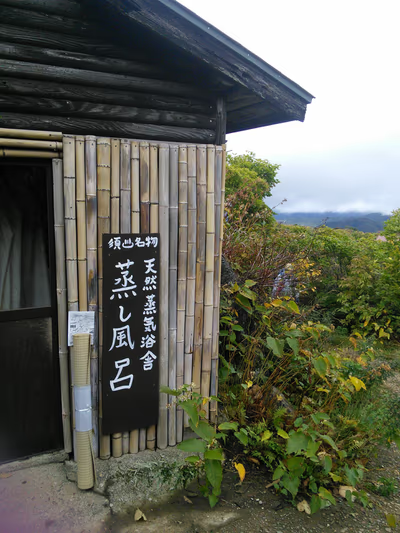
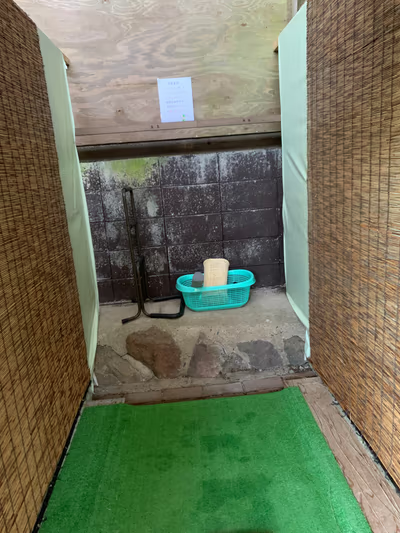
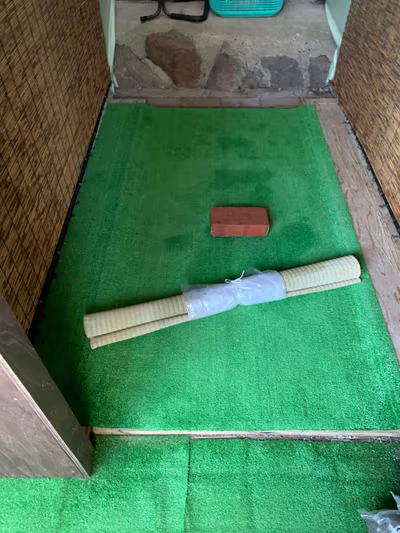
This is the Oiran Bath. No one has posted a review on Google Maps in a year. There happened to be a construction guard there, so I asked him. It seemed like there were quite a few people using the bath. It looks like you could just barge in without permission, but that's not allowed. The proper thing to do is to ask the Sugawara Onsen facility if you wish to use it. They sell mats and plastic sheets in sets at the shop, so it's best to purchase them there. The staff at the shop will give you a paper with instructions on how to use it, so be sure to listen to the warnings! Then, put the hot spring facility sign on and head up to the hut. It takes less than 10 minutes to get there. Now, which room should I choose? I was a little unsure, but they're all the same, so I chose the third one from the front. To be honest, it's not a very pretty hut. Now, when I removed the bricks, steam slowly rose. I thought about it for a bit. Today, the temperature is low and the wind is strong, so cold air is coming in through the gaps in the hut. In other words, it's cold inside. I was wondering whether I should get naked or wear underwear. In the end, I went naked, but I think it might be better to wear underwear. It might be nice to wear a yukata, like at the sand baths in Ibusuki. It might be nice if there was a service that rented them out for a few hundred yen. For someone as tall and well-built as me, the mat and plastic were too small and only covered half of me... My lower back was hot and I was sweating, but my upper body was freezing. I was just barely able to get a Docomo signal, so I spent about 30 minutes playing with my smartphone. If you're over 170cm tall, one mat set isn't enough, so it's better to buy two. Also, the drafts get in and it's cold, so it's best to avoid going completely naked on cold days... I'm not sure if the barber-style bathing method, where you put a big plastic bag over your shoulders and sit in a chair, is a good idea. There's probably room for improvement, but it's fun to bathe the old-fashioned way. This is a memorable and challenging hot spring. If you've read this review, I urge you to give it a try! 🐺 Oh!
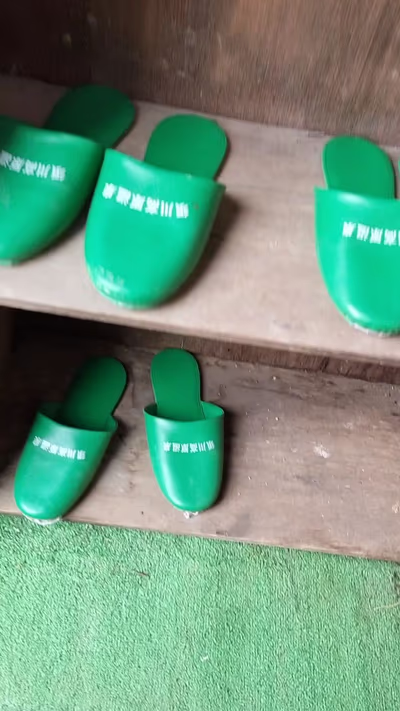
I purchased a mat and plastic sheet for 350 yen at the hotel shop and applied at the open-air bath counter. The number of people allowed is limited to four, so they seem to be managing the number of people, but there were no other guests around. However, this old man's enthusiasm for "enjoying the steam bath" was so strong that his explanation was entertaining. I got excited. "That plastic is too small and won't do," he said, but it was the original product I'd purchased on the official route (lol). I grabbed a 100x200cm ground sheet I had in my car. After that, I walked up the mountain trail for about five minutes to the steam bath hut, which was unattended. It's a mountain path, but it's generally well-maintained, so I could climb even in sandals. There's no charge for use, so I changed into slippers inside and headed to a private room with a sign indicating availability. I pushed the bricks aside as shown in the photo and laid out the perforated mat. There were also two cushions and a pillow to support my lower back. I see, the old man was right. The plastic sheet I bought only covered my waist area, and the steam escaped, so it wasn't very effective. When I draped a large sheet over me like a futon, I was steamed from my shoulders to my feet, and sweat poured down like a waterfall. Unlike a sauna, my face was exposed, so it was very comfortable. Unlike a sauna, there was no cold bath, and the hot springs were far away. It was a hassle to have to wipe off the sweat and change clothes, but it was worth experiencing at least once in my life. There was no lighting, so I was asked to come down before sunset.
Free to use. No permission required. How to use it as a free guest. Purchase a special mat and plastic sheet at the Sugawa Kogen Hotel's shop. It's not a rental. After use, ask the place where you bought it to dispose of it, or take it home with you. Never leave it behind. Leaving it behind thinking someone else will use it will cause mold to grow and render it unusable. A manual is also provided. You'll get drenched in sweat, so a yukata or a change of underwear is necessary. Absolutely. The interior has four compartments, separated by curtains for privacy. It's not cold. A PVC pipe protrudes from the middle of the board, from which geothermal heat is emitted. There's a risk of low-temperature burns, but not enough to cause burns. Remove the bricks, set up the special mat with holes, and put on the plastic sheet to absorb the steam. 15 to 20 minutes is recommended. Pure bliss. Those who are concerned about hygiene should bring their own cleaning supplies, a mat, a plastic sheet, and a yukata (Japanese summer kimono).
This would be impossible for someone with germophobia. I bought a mat set (¥350) at the shop in Sugawa Onsen and carried it up the mountain for about 10 minutes (I was full of doubt, wondering if it was really at the end of this mountain path, since I had only gone there for the bath). When I removed the red brick lid, steam rose with a hiss. I covered myself with the plastic sheet and lay down, and the warmth gradually spread. Hot springs are nice, but the gentle warmth of a steam bath is just so good!
It's located along the hiking trail from Sugawa Kogen Onsen to Nagorigahara. You seem to register at the open-air bath (Dainichi-yu) shown in the photo, and there's a bathing board hanging at the entrance that you take with you. It's said to have gotten its name because courtesans used it in the past to avoid the smell of sulfur.
Showing the longest 5 of 10 visitor reviews. Reviews are displayed under fair use for editorial commentary; full text and authorship credit belong to the original reviewers.
Make a day of it — a quick-dry towel, dry bag, and post-soak layers take almost no pack space.
Shop outdoor gear at Traverseon →Affiliate link — SoakNation may earn a commission at no cost to you.How we make money