Shimodate Station
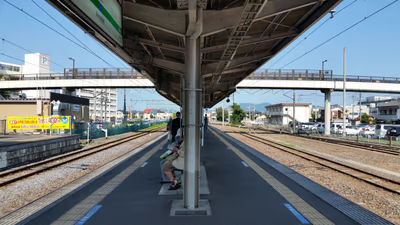
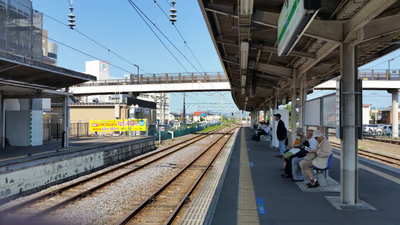
The line’s gentle finale meets a lively regional hub linked with Mooka Railway and JR Mito Line. Shimodate feels like a crossroads of stories — rural echoes mingling with onward routes. A warm, satisfying end to a peaceful journey. 🚉🌤️🌿 Tourist Tip: Easy transfers here. Explore the area around the station for food. Check train times for onward connections. 🔁 Joso Tour: From Toride’s bright bustle I drift into widening sky, the Jōsō Line humming like a quiet thread through Ibaraki’s fields. Moriya’s modern pulse softens into Koginu’s wind-brushed calm; Mitsukaidō ripples with river light, and further north the land deepens into farm-textured stillness. By the time I reach Shimodate, my pockets feel lined with sunlight, open roads, and the easy breath of countryside time. 🌾🍃🚉 Mooka Tour: The Mooka Line drifts through fields like a quiet thought, diesel sighs and steam-whistles brushing the golden air 🌾. Villages rise softly—roofs in morning mist, chimes trembling on wooden eaves— until Mashiko’s kilns glow like small suns, shaping earth into stories 🔥. Farther on, forests breathe green lullabies, and Motegi waits at the valley’s edge, calm as a lantern in twilight 🌙.
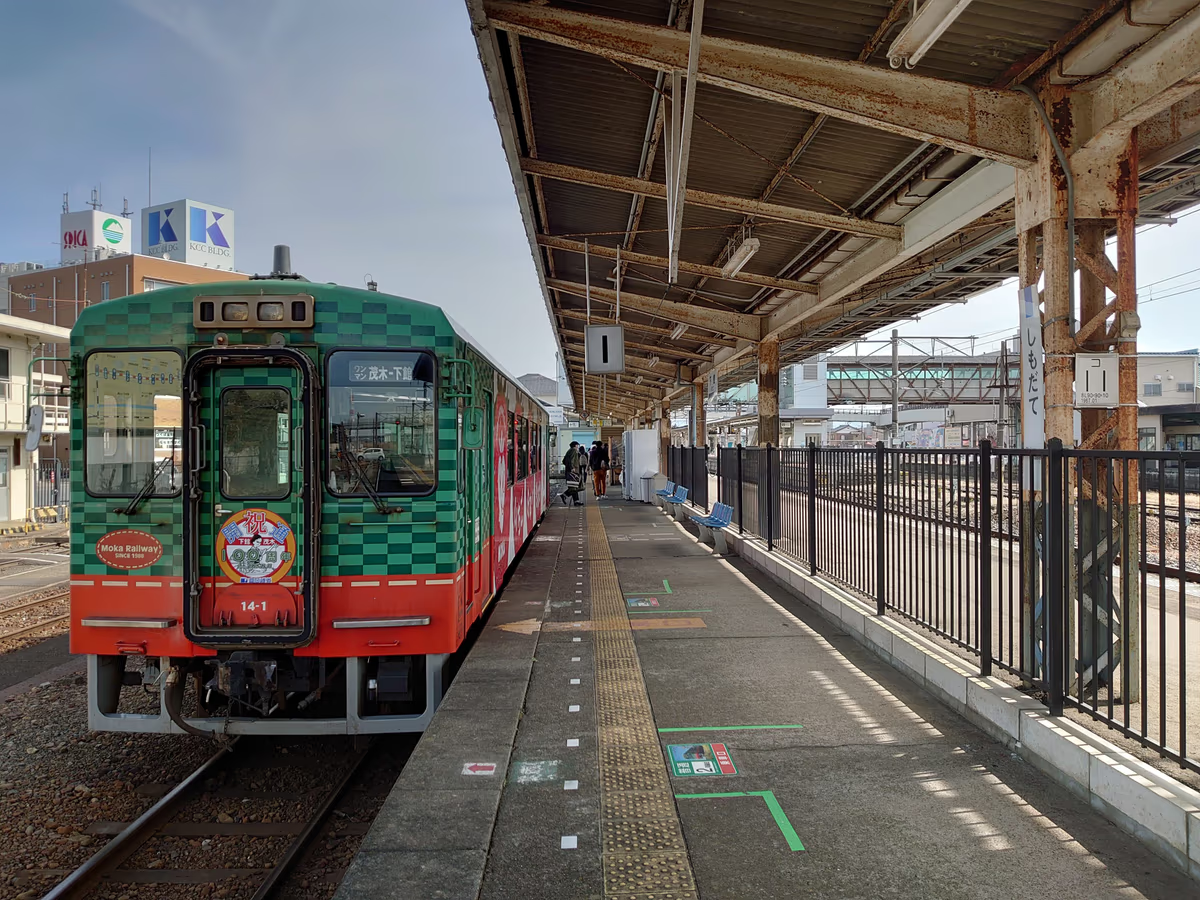
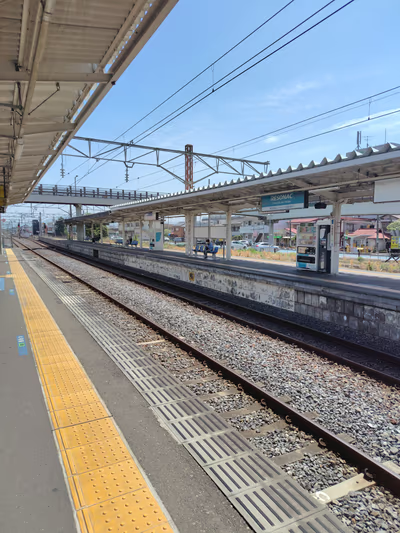
This large station has three platforms and six tracks and is served by three lines: the JR Mito Line, the Kanto Railway Jōsō Line, and the Moka Railway. Elevators are available for accessibility, but they are not available on the Kanto Railway platform. Inside the station building, there is a NewDays convenience store, a Midori no Madoguchi (Green Counter), two ticket vending machines for the Jōsō Line and the Moka Railway Line, and one reserved-use ticket vending machine. I visited on a Saturday morning and early afternoon, and there was a taxi waiting in front of the station. There are air-conditioned waiting rooms inside the station building and at platform 2 for the Mito Line Tonobe line. Chikusei City Hall is located in front of the station.
Very confusing to use the Moka Railway Line (tiny 1 car line passing notably by Mashiko). It is opposite to the Mito Line track from Oyama. There are IC card machines for entering and leaving, but those are only to enter the JR lines. To use the Moka Railway Line you have to take a ticket when boarding indicating which station you boarded. You will pay the fare when you get off by presenting your ticket at the fare office. Still gave a good rating since we (non-Japanese speaking foreigners) were helped by two very nice JR station staff who very patiently explained everything to us with Google translate for about 30 minutes, even going as far as helping us plan the return trip to Tokyo with their timetables.
I got off the Mito Line just after 9:30am on Sunday, May 4th, 2025. I was using the Kanto Railway, so when I got off, many people got off and I headed straight for the platform where I could transfer to the Moka Railway. There was a long line. I ignored them and headed to the Kanto Railway platform. I asked the station staff there why the Moka Railway was so crowded, and they replied that many people were heading to the Mashiko Pottery Fair. I agreed. But even though I thought it might be too late to go to the Mashiko Pottery Fair, I was thrilled with my first ride on the Kanto Railway.
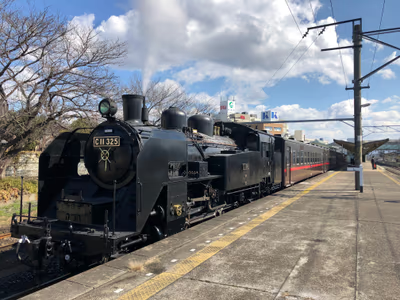
We were from Tokyo and all the way here on the way to Honda Museum, so have to change to a conventional traditional steam train at this station. Have not been seeing such steam train for decades, not many too around the world. It was facinating and exciting experience for us to take this train. The black steam train was late to board and as a matter of fact, no crowd too at all. Basically may be around 3 - 5 pax per cabin.
Showing the longest 5 of 10 visitor reviews. Reviews are displayed under fair use for editorial commentary; full text and authorship credit belong to the original reviewers.
Make a day of it — a quick-dry towel, dry bag, and post-soak layers take almost no pack space.
Shop outdoor gear at Traverseon →Affiliate link — SoakNation may earn a commission at no cost to you.How we make money