Yumoto hot spring source
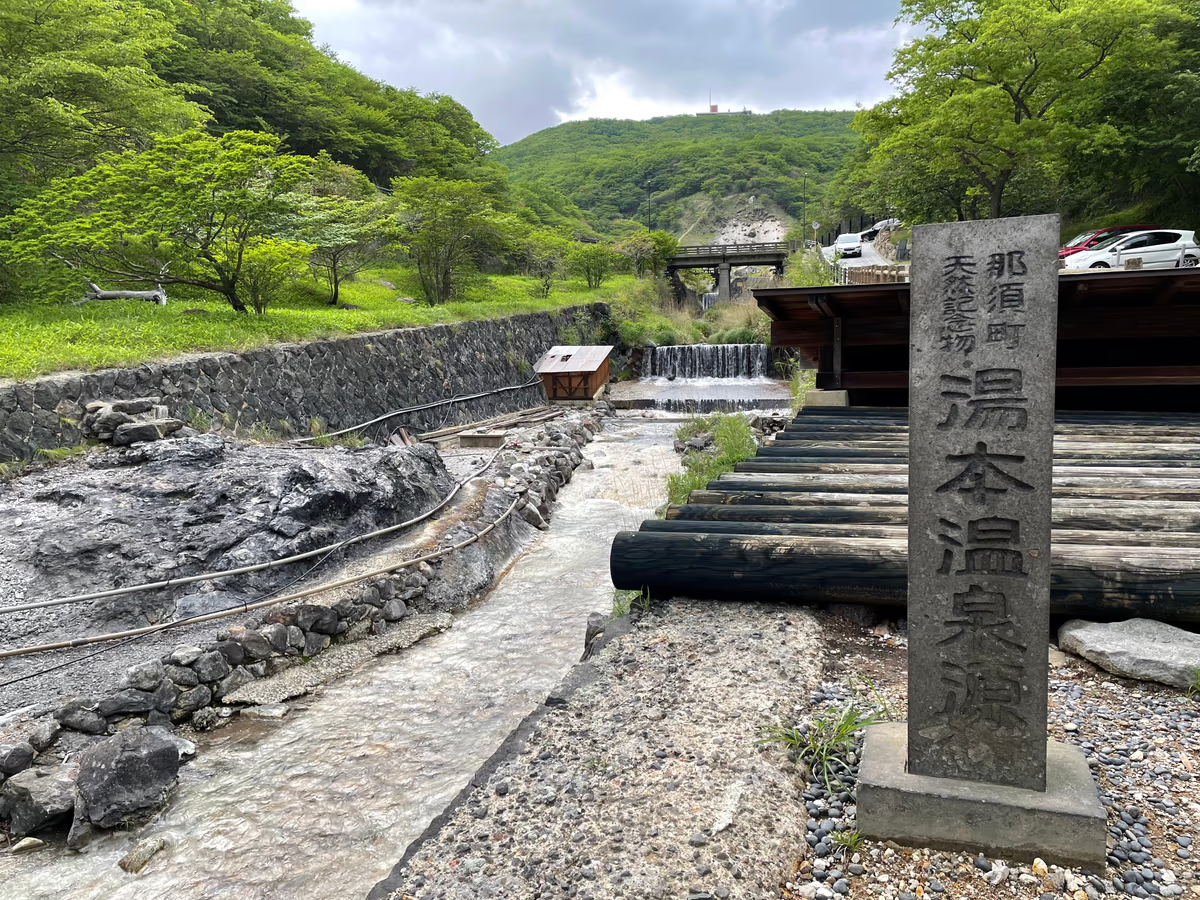
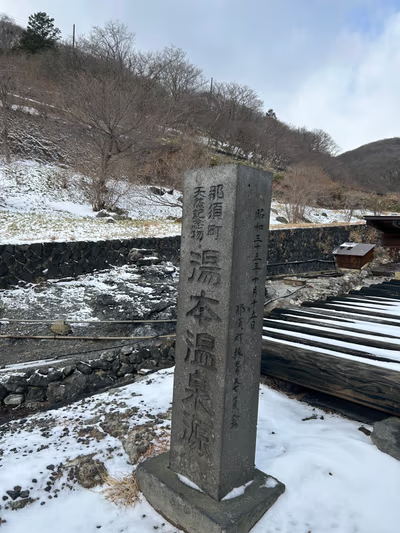
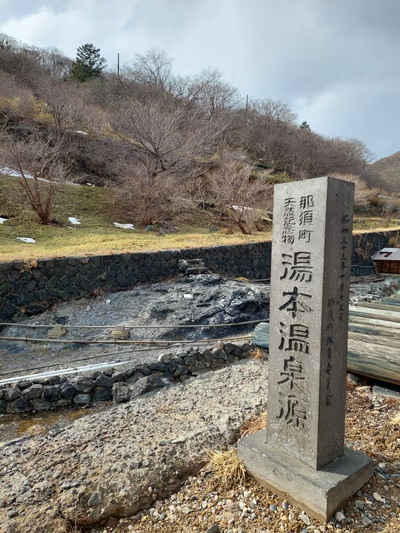
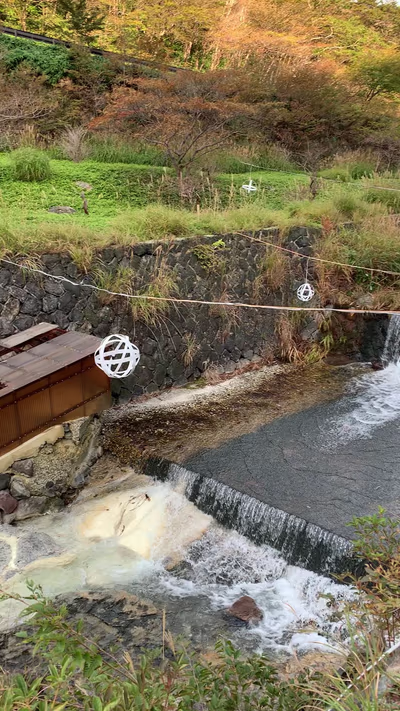
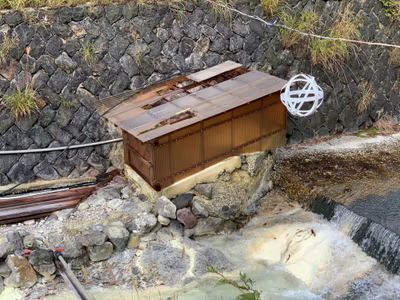
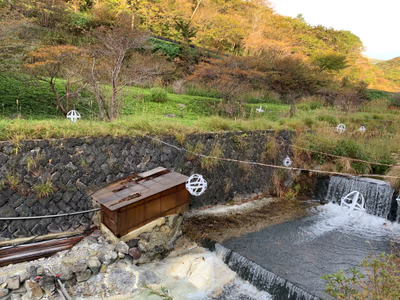
October 22, 2024 [Nasu Town Yumoto Hot Spring Source] While strolling around the area around Shikanoyu, I noticed a pipe running through the Yukawa River, giving the river a sulfur-colored color. The hot spring source is located along the Yukawa River. It is also known as "Motoyu" or "Shikanoyu," and is the oldest of the Seven Hot Springs of Nasu (Motoyu, Daimaru, Kita, Benten, Takao, Mitogoya, and Itamuro). According to legend, during the reign of Emperor Jomei (629), Kano Saburo Yukihiro, a resident of Myogazawa at the foot of Mount Nasu, went hunting and shot and wounded a large white deer. He then found the arrow-wounded white deer bathing in the spring water in a valley at the foot of Chausugoku. This is said to be the first discovery of a hot spring. Nasu Onsen appears in the Suruga Province Tax Register (738), making it already famous during the Nara period. It's the birthplace of today's Nasu Onsen hot springs, and is designated a natural monument. Until the Edo period, hot springs catering to visitors for therapeutic bathing were located along the Yukawa River from this source. However, the surrounding area suffered a major disaster when a landslide caused by heavy rain on June 14, 1858 (Ansei 5). As a result, the hot springs were relocated to their current location on higher ground. Asahi Onsen opened during the Meiji period, and after the Taisho period, Shinnasu, Yahata, Imori, and Koko hot springs were added, making the area known as the Nasu Eleven Hot Springs. After the war, advances in drilling technology led to a dramatic increase in the number of hot springs. Flow Rate: 800 liters per minute Temperature: 68°C Name: Yumoto Hot Spring Source Location: 181 Yumoto, Nasu Town (Within the river) Type: Monument/Natural Monument
The source of this hot spring is said to have been discovered in 630 AD. It is a high-temperature hot spring area with the smell of hydrogen sulfide hanging in the air. The scenery of the sulfurous zone around the Sessho-seki stone gives it a similar atmosphere to Akita's Tamagawa Onsen, but because it's not far from the Tokyo metropolitan area, to be honest, it doesn't feel as remote. If you're impressed by this place, you should definitely visit the previously mentioned Tamagawa Onsen and Nyuto Onsen Tsuru no Yu, even though they're quite far away. In particular, Tsuru no Yu, like Shikanoyu, has a traditional design with no washing area, and the mixed bathing is open-air, so it's highly recommended. But even though I'm a Nagoya native and a big fan of Akita 😄
The source of Nasu Yumoto's hot spring is located to the north of Shikanoyu. There is no visible hot spring water, but there is a small hut where the hot spring water is collected.
The sacred fire festival was held on the last Sunday of May. It was amazing, I don't know how to describe it, but perhaps I should say it was very enchanting.
The smell of sulfur is just wonderful. Nearby is Nasu Onsen Shikanoyu. On snowy days, the road conditions are poor, so you need to drive carefully.
Showing the longest 5 of 10 visitor reviews. Reviews are displayed under fair use for editorial commentary; full text and authorship credit belong to the original reviewers.
Make a day of it — a quick-dry towel, dry bag, and post-soak layers take almost no pack space.
Shop outdoor gear at Traverseon →Affiliate link — SoakNation may earn a commission at no cost to you.How we make money