Yunota Onsen
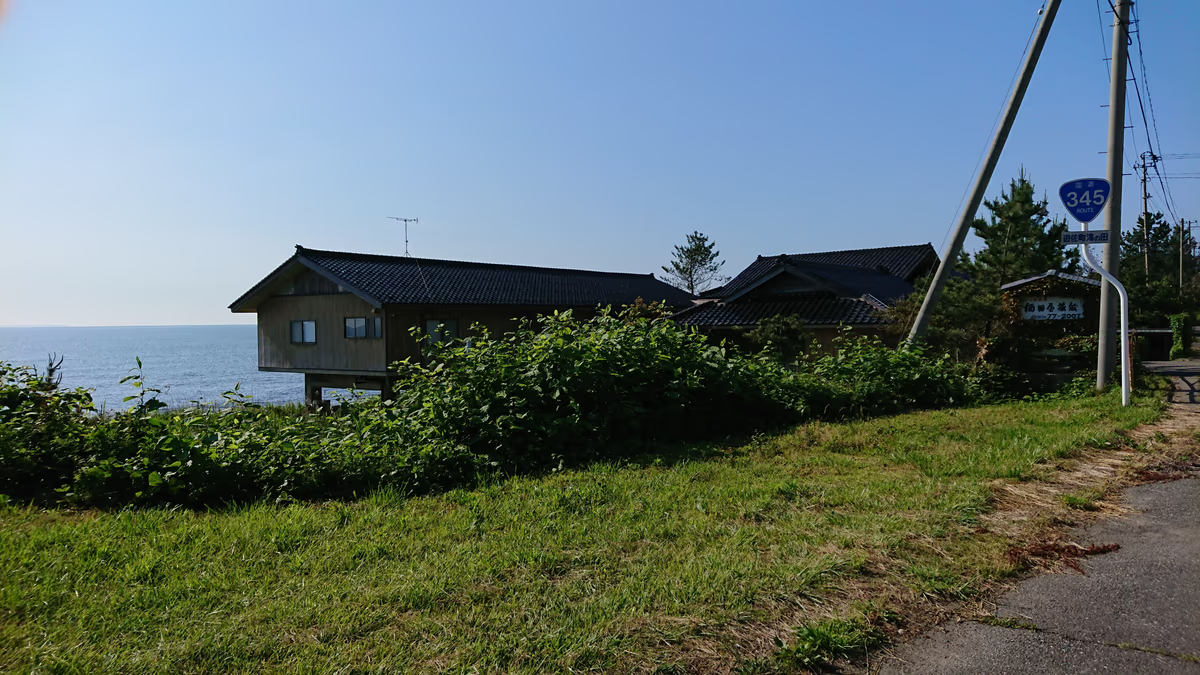
I had planned to stop by on my way back from the Sixteen Arhats, but although there were signs for the hot spring resort, I had no idea which inns were still operating and which had closed down. Since the facilities were lined up along the national highway, I couldn't stop the car each time to check, so in the end I couldn't stop by. I had been looking forward to bathing while overlooking the Sea of Japan, so it's a shame. Even the staff at the restaurant where the Sixteen Arhats are located didn't know the details. It's a pity, considering the wonderful location.
There used to be several inns here, but currently only Sakataya Ryokan remains open. It seems that in the past it was abandoned due to rough waves. However, during the Taisho era it was a famous hot spring that was touted as "a famous bathhouse within the prefecture with beautiful scenery, attracting many people from far and near to bathe," but now there is only one inn remaining. It would also be nice to soak in this historic, dreary hot spring.
Legend has it that hot springs began to flow in this area as a result of the Kisakata earthquake that occurred in 1804 (the first year of the Bunka era). This earthquake also caused the scenic Kisakata, which was described by Matsuo Basho and others as "Matsushima in the east and Kisakata in the west," to rise and become land. The opening of the Nankoubozaka bypass on the Ushu Hamakaido road may also be related to the opening of Yunoda Onsen.
Stayed here during my cycling trip in Japan, back in 2013. I did enjoy my stay and the owners were friendly and welcoming. The hot spa was great after a tough day on the bicycle.
The location is fantastic! The sunset over the horizon is something you can't experience anywhere else. But that's about it; everything else is a bit disappointing...
Make a day of it — a quick-dry towel, dry bag, and post-soak layers take almost no pack space.
Shop outdoor gear at Traverseon →Affiliate link — SoakNation may earn a commission at no cost to you.How we make money